When Your EV Runs Dry Above Bolton: A Calm Guide to Moorland Recovery
Electric cars are now a familiar sight around Bolton. They glide through the town centre, queue at the Middlebrook retail parks and head up towards Rivington and Belmont with barely a sound. Most of the time that silence is a pleasure. When the battery gauge drops faster than you expected and the nearest charger feels a long way off, it can feel a lot less charming.
The good news is that an EV running low or stopping on a remote local route is not a disaster. It is a recovery job with a few specific rules. Here's what to expect, what to tell the recovery operator and how to plan around Bolton's charging network.
Why an EV breakdown isn't a jump-start job
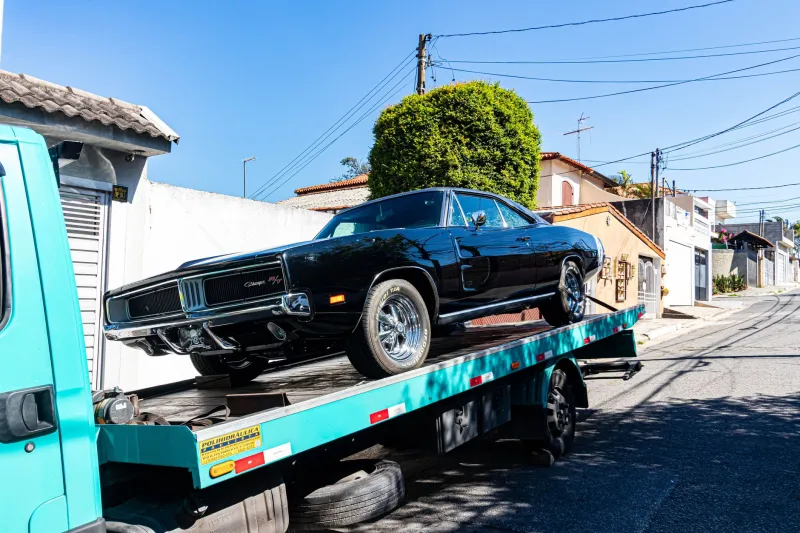
With a petrol or diesel car, a breakdown often means a flat battery, a fuel issue or a mechanical problem that can be diagnosed at the roadside. An electric car is different. There's no can of electricity to pour in, and the high-voltage system isn't something a passing good Samaritan should be poking about with. Recovery operators trained for EVs will isolate the vehicle safely, check what the fault actually is and load it onto a flatbed or low-loader rather than towing it with wheels on the road.
That matters on moorland roads. Some EVs can be moved in neutral for short distances, but many can't be towed in the traditional way without risking damage to the motor or drivetrain. If you're on a narrow lane near Scout Road or a windy stretch of the A675, the last thing you want is a well-meaning tow that makes things worse.
Watch the warning signs before zero
Modern EVs are good at warning you, but the messages can be subtle. A reduced power mode, a turtle icon, a sudden drop in estimated range or a heater that stops blowing warm are all hints that the car is protecting itself. Cold weather makes this more likely: batteries are less efficient in low temperatures, and running the heater, lights, wipers and demisters all takes energy.
Don't treat the estimated range as a promise. It's a guess based on recent driving, temperature and how heavy your right foot has been. If you're heading up towards the moors, add a buffer. A car that shows 40 miles of range in town may show considerably less once you're climbing in the cold with a headwind.
Planning charging stops around Bolton
Bolton isn't a charging desert, but it pays to know your options before you set out. The town centre, Middlebrook and the main A6 and A58 corridors have public charging points, and there are rapid chargers within easy reach of the bigger retail and business parks. The trick is to plan around the type of charger you can actually use, not just the nearest pin on a map.
Check the connector type, the charging speed and recent user reviews before you rely on a particular point. A charger can be out of service, busy or blocked by a non-EV parked in the bay. Apps and Zapmap-style services are useful, but a quick phone call to the site can save a wasted detour. If you're heading out to Rivington, Belmont or the edges of the West Pennine Moors, arrive with more charge than you think you need and treat the return leg as part of the plan.
For everyday Bolton driving, charging at home or at work is usually the cheapest and easiest option. For longer local trips, a top-up at a rapid charger over a coffee is often enough. Just don't leave it to the last few percent on a cold night.
If your EV stops on the moors
First, get safely off the carriageway if you can. Switch on the hazards, keep your seatbelt on until you're sure it's safe and stay with the vehicle if you're on an exposed moorland road. Put on warm clothes, use the remaining charge wisely and don't leave the car in a live lane to go looking for a sign.
When you call for recovery, have the following ready:
- Your exact location, including the road name and direction of travel. A what3words reference is ideal.
- The make, model and colour of the car.
- The state of charge, if the car will still show it.
- Whether the car is showing a fault message, refusing to move or making a noise.
- Whether there is smoke, a burning smell or any sign of damage.
Don't try to charge a car at the roadside with a domestic extension lead, and don't attempt to tow it yourself. If the vehicle is blocking a lane or you feel unsafe, say so clearly when you call. That changes the priority.
How EV recovery works
A trained EV recovery operator will usually arrive with a flatbed or a suitable low-loader. They'll assess the vehicle, isolate the high-voltage system where needed and load it safely. Depending on the fault, the car may be taken to a charger, a dealer, a repairer or your home. If the issue is simply that the battery is empty, a mobile charging unit can sometimes help — but that's not always practical on a remote moorland road, and it isn't available for every fault.
This is where a local service earns its keep. A Bolton-based recovery team knows which lanes are wide enough for a flatbed, where to turn around near the moors and how to get to you without adding an hour of guesswork. They also know that an EV call-out needs different kit and a different approach from a diesel van that's run out of fuel.
Be ready before you need us
Save a recovery number in your phone, check that your breakdown cover includes EV recovery and keep a warm layer and a charging cable in the car. If you're planning a winter trip over the moors, charge a little higher than usual and check the weather for the higher ground. Most EV breakdowns are inconvenient rather than dangerous, but a bit of planning keeps them that way.
Bolton's electric fleet is growing, and the roads around the moors are only going to see more EVs. Treat the range estimate with suspicion, plan your charging stops and call for trained help if the car stops. Calm beats guesswork every time.