The Back-Up Car Has Its Own Weather: Waking an Idle Vehicle on a Bolton Drive
Photo: Stephen Armstrong , CC BY-SA 2.0, via Wikimedia Commons
There is a particular kind of Bolton household car that leads a quiet life. It is the back-up hatchback on the drive in Deane, the old estate kept for tip runs from Horwich, the weekend car that only comes out when the main one is in for a service. It is insured, MOT’d and generally regarded as “ready if we need it”. Then the need arrives, and the car does not.
That is rarely bad luck. An idle car is still a working machine with fluids, seals, electrical drains and steel brake discs exposed to Bolton’s damp air. Left alone, it slowly changes. The trick is to check it before the emergency, not during one.
What “once a month” actually does to a car
A monthly trip to the shops and back is not much of a workout. Short journeys start the engine, move the car a few miles and switch it off again. The battery takes a hit on start-up and never gets a proper chance to recharge. Add cold mornings, a dashcam on a permanent live feed, or an interior light that has been nudged on, and a healthy battery can slide into “reluctant” without anyone noticing.
Brakes suffer in a similar quiet way. In wet weather, bare brake discs flash over with surface rust quickly. A normal drive clears that light film. A car that sits for weeks can develop something thicker and more stubborn, especially if it is parked with the handbrake on. The rear brakes may stick, the pedal can feel odd for the first few metres, and that first trip becomes a test rather than a journey.
Tyres are easy to overlook because they look fine from the pavement. They lose pressure naturally, and a car sitting in one position for weeks can develop flat spots. Bolton’s colder months make pressure drops more noticeable. Soft tyres affect steering, braking and fuel use, and cracked sidewalls are not something to discover at 50mph on the A666.
Fuel has a shelf life too. Petrol degrades more noticeably than diesel when left for long periods, and a car with a near-empty tank is more likely to pull damp air into the system as temperatures swing. Fluids can absorb moisture, seals can dry, and damp can settle inside a cabin that is never warmed through. None of this means the car is doomed. It means it needs a routine.
The ten-minute walk-around before you turn the key
Start with the car cold and parked safely. Look at all four tyres, including the spare if it has one. Check pressures against the handbook or door pillar, not against what they felt like last summer. Look for cracking, bulging or anything stuck in the tread. A quick glance underneath for fresh drips is worth more than a hopeful sniff under the bonnet.
Open the bonnet and check the obvious levels: oil, coolant, screen wash and brake fluid. You are not servicing the car on the drive; you are looking for a reason not to drive it. Check battery terminals for green or white crust, and make sure the battery is secure. If there is a maintainer lead fitted, use it properly rather than draping a charger over the car in the rain.
Walk around the lights, including indicators and brake lights if you can check them alone or with a helper. Look at the brake discs through the wheels. A thin, even bloom of rust is normal after rain. Deep pitting, flaking or a lip on the edge is a different conversation. Sit inside and check for damp, mould or a swimming-pool smell in the footwells. A car that has been letting water in will not improve by being ignored.
Before you start it, note the fuel level and how old it is. If the car has been sitting for months on a quarter tank of petrol, do not plan a long motorway run as its first outing. A gentle local drive to a filling station and back is a better start.
Starting it without making things worse
When you do turn the key, let it idle for a moment and listen. A single sluggish crank that catches is one thing. Repeated clicking, a rapid dash-light flicker or no crank at all is the car telling you the battery is not up to the job. Do not sit there grinding away and hoping. That is how a cheap battery problem becomes a starter motor problem.
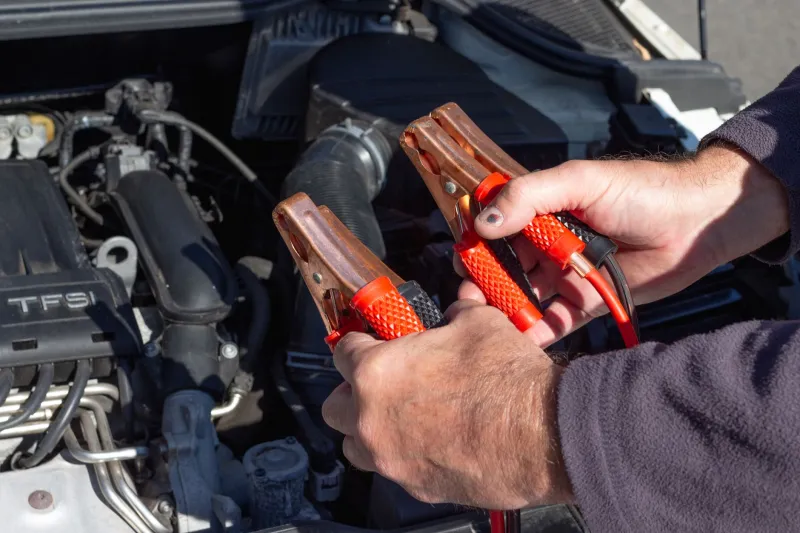
If you use a jump pack, follow its instructions and connect it properly. Once it starts, do not simply leave it idling on the drive for ten minutes and call it fixed. A proper drive of 20 to 30 minutes, at sensible speeds and with some normal braking, does far more for the battery and brakes. Use the first few hundred metres gently. Apply the brakes early and lightly to clear surface rust, and be ready for a sticky handbrake or a slightly warped feel if the car has been parked for a while.
When to stop coaxing and call for recovery
A no-start is not always a roadside puzzle to be solved by willpower. If the car clicks but will not turn over, if there is a strong fuel smell, if the brake pedal sinks or feels spongy, or if you can see a puddle of fluid under the car, leave it where it is and get help. The same applies if a tyre is flat or cracked, a wheel is seized, or the car starts but runs badly with warning lights on.
On a Bolton street, safety comes before diagnosis. Put your hazards on, keep yourself and any passengers away from moving traffic, and do not crawl under a car on a public road. If the car is blocking a busy route near Astley Bridge, Farnworth or the town centre, recovery is not an overreaction; it is the sensible way to move a vehicle that should not be driven.
Make the back-up car a maintained car
The simplest fix is to use the second car properly once a month. Not a two-minute shuffle on the drive, but a real run that warms it through, charges the battery and exercises the brakes. Check the tyres at the same time, keep the fuel at a sensible level, and wash off winter salt when you can. If it lives in a garage, a battery maintainer is a worthwhile investment; if it lives on the street, a solar trickle charger can help but will not replace a failing battery.
A back-up car is only useful if it is ready before you need it. Treat it as a vehicle with its own maintenance needs, not as a spare key in a drawer. A ten-minute check on a quiet Sunday is far better than discovering the problem on a dark Tuesday when the main car is already out of action.