Reflective, Not Reckless: A Bolton Driver's Night Breakdown Playbook
Photo: John McMillan, CC BY-SA 2.0, via Wikimedia Commons
There's a stretch of the A666 past Egerton where the streetlights finally give up and the darkness comes down like a curtain. If your car dies there on a November evening, you've got maybe ninety seconds of ordinary life before you're standing on a verge, in the cold, trying to work out what happens next. This is a guide for that moment.
First, deal with the car — then deal with yourself
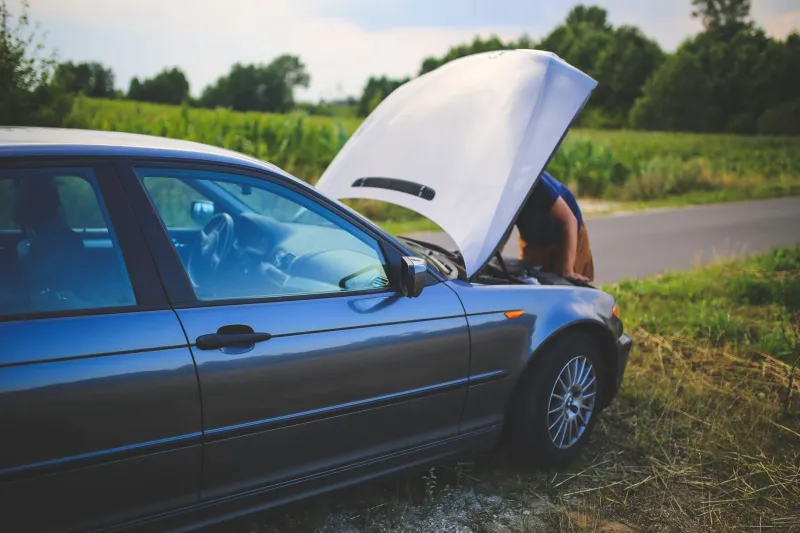
The instinct is to get out and start looking under the bonnet. Fight it. On an unlit road, your priority order is: get the car as far from the running lane as you can, get your lights working for you, and only then start investigating.
If you can roll it onto a lay-by, a farm entrance, a wide verge or a side road, do. Even twenty metres of coasting changes the job completely. If you can't, put your hazard lights on immediately, and if you have them, switch on your sidelights too. On a road like the A666 heading north out of Bolton, traffic is often doing a comfortable sixty and the driver in front of you has already committed to an overtake they can't easily abandon.
Don't put a warning triangle out unless you are absolutely certain you can do it safely and you're on a straight, well-sighted stretch. On a dark, twisty road with no pavement, walking back up the carriageway with a triangle in your hand is genuinely one of the more dangerous things a driver can do. Many recovery drivers would rather you stayed in the car.
Make yourself glow before you go anywhere
If you keep one thing in the car for winter, make it a high-vis vest — and keep it in the cabin, not buried under the spare wheel. A vest you have to unload half the boot to find is a vest you won't wear.
While you're at it: a torch that works, a charged phone, and a warm layer you can pull on without getting out. On the moorland edges above Bolton — the lanes towards Belmont, the tops around Chapeltown, the run over to Blackburn — the temperature drops faster than you'd expect once the sun's gone, and a twenty-minute wait in a thin jacket quickly turns into an hour of shivering that makes clear thinking harder.
Pick your waiting spot deliberately
Here's the rule that matters most after dark: stay on the side of the car away from traffic, and never stand behind it. A driver coming round a bend at speed sees your lights long before they see you, and if they misjudge the gap, the boot is the first thing they hit.
Better still, sit inside with your seatbelt on, engine off if it won't run, hazard lights flashing. If you're on a fast, unlit stretch and there's a safe gate, verge or field entrance a few steps away, standing behind a barrier is often the best option of all — but only if getting there doesn't mean crossing the carriageway.
Passengers matter here too. Keep everyone together, keep them visible, and don't let anyone wander off up the road to "see if there's a house". On the quieter lanes around Turton, Bradshaw and Harwood, there often isn't one for half a mile, and a pedestrian in dark clothing on a national-speed road is nearly invisible.
The call: what dispatch actually needs
When you ring for recovery, the person on the other end is trying to pin you down on a map. Give them the boring details first:
- The road and direction — "A666 northbound, just past the Egerton turn" beats "near Bolton" every time.
- The nearest landmark you can actually see — a pub, a junction, a farm gate, a bridge.
- What3words if you have it, or a dropped pin shared from your phone.
- The vehicle: make, colour, registration, and whether it's rolling or stuck.
- Whether you're in a live lane, on a verge, or safely off the road.
- How many people are with you, and whether anyone is vulnerable or cold.
If your phone battery is hovering around four per cent, say so early. Dispatch can call you back or work by text, but they need to know.
When the truck arrives
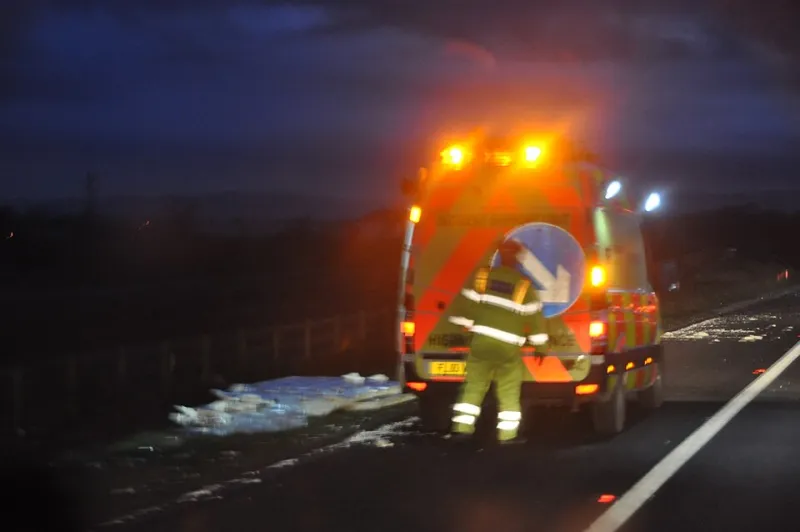
Recovery drivers do this every night, and they'll have a routine — but you can make it much safer by being predictable. Stay where you are until they've stopped and signalled. Don't walk towards an approaching truck with a torch pointed at the windscreen; you'll blind the one person you most need to see you.
Once they're stationary with beacons on, that's your cue. Approach from the side, not from behind the truck, and keep your own torch low and pointed at the ground. If you've got children or a dog in the car, mention it before they start winching — it changes how they'll work.
On a dark verge, agree where you'll stand while the car is loaded. Most crews will want you well clear of the wire and the ramps. Ask, rather than assume.
Cold, condensation and keeping your head
If your engine runs and you're safely off the carriageway, keep the heater on and the hazards flashing — but be aware of exhaust fumes if you're parked in a dip or against a hedge, and crack a window. If it doesn't run, layers, a blanket and a flask you forgot you had will get you through most waits.
And try not to spend the whole wait refreshing the tracking link. Night callouts on the A666 can stack up behind a motorway job, and the crew will get to you.
The short version
Get off the lane if you can. Light up. Stay on the safe side of the car. Give dispatch a location they can actually find. Meet the truck from the side, torch low. It's not complicated — it's just a lot easier to remember when you've decided it in advance, in daylight, with the heating on.