The 30mph Handbrake Nobody Fitted: Limp Mode on Bolton's Fast Roads
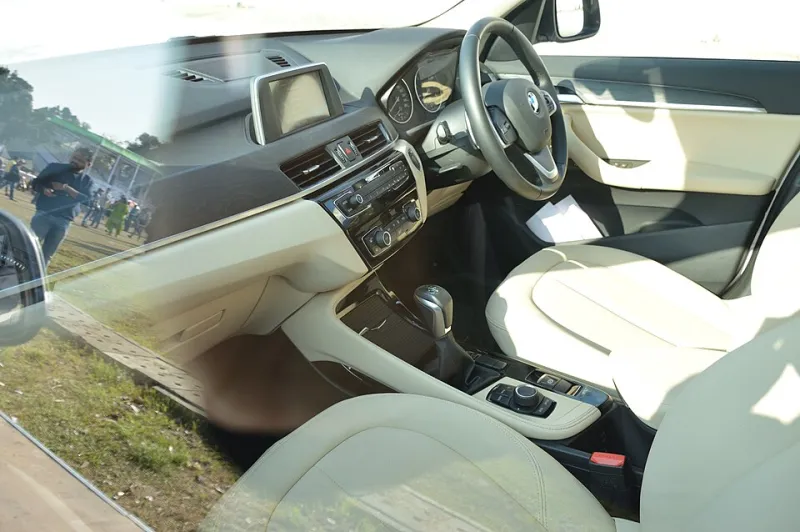
Photo: Biswarup Ganguly, CC BY 3.0, via Wikimedia Commons
You're heading out of Bolton on a dual carriageway, traffic moving nicely, and then the dash lights up like a small Christmas tree. The engine note flattens, the throttle goes soft, and no matter how politely you ask, the car settles at about 30mph and stays there. Nothing has exploded. Nothing is on fire. The car has simply made a decision on your behalf.
That's limp mode. It's one of the most misunderstood things that happens to a modern car, and it's also one of the easiest to make worse by panicking. Here's the level-headed version.
It Isn't Breaking Down — It's Protecting Itself
Limp mode, sometimes called reduced power mode or failsafe, is the engine management system deciding that something isn't right and cutting performance to protect expensive parts. It's a deliberate strategy, not a malfunction in itself. The car is telling you it has spotted a problem and doesn't want to make it worse by letting you use full throttle.
Which is reassuring in theory. In practice, a car that has quietly capped itself at 30mph while articulated lorries bear down on you is a problem you need to solve in the next mile, not the next hour.
The golden rule: don't fight it. Stabbing the throttle and hoping the fault clears rarely works and can turn a sensor issue into a much bigger bill if the underlying cause is heat or oil pressure.
The Usual Suspects Behind a Capped Speed
Limp mode doesn't tell you what's wrong. It just tells you something is. These are the triggers we see most often around Bolton:
- Sensor faults. Air flow, manifold pressure, throttle pedal or crankshaft sensors can all nudge the ECU into limp mode. These are often intermittent and often the least serious, which is why the car sometimes snaps back to normal on its own.
- Diesel particulate filter clogging. Very common on cars doing short school runs, supermarket trips and stop-start work around town. The filter doesn't get hot enough to regenerate, back pressure builds, and the car restricts power as a warning shot.
- Overheating or coolant loss. A temperature warning plus limp mode is the one to take most seriously. Pull over as soon as it's safe and switch off. Continuing to drive a hot engine is how a radiator becomes a head gasket.
- Transmission warnings. A gearbox that's unhappy often drops into a safe map, holding a single gear and refusing to shift. The dash usually says so, though sometimes only with a symbol.
- EGR and turbo-related faults. Less urgent but still a tow in most cases if the light stays on.
- Low oil pressure. Rare, but the light you never ignore. Stop immediately.
Getting Off a Fast Road Without Making It Worse
If the cap arrives on a quick road — the A666, the link road out toward the M61, or anywhere with traffic passing at 60mph-plus — your job for the next two minutes is simple: become boring and predictable.
Hazard lights on. Stay in the left-hand lane. Hold a steady speed rather than braking hard for no reason. Signal early. Take the very next exit, layby or side road, even if it's not where you were going. A retail park car park, a pub forecourt, a quiet industrial estate entrance — all better than a live lane.
Avoid the hard shoulder unless the car genuinely cannot move another yard. It's the least safe part of any motorway or fast dual carriageway, and a car that's still rolling at 30mph is better off reaching an exit.
Once you're stopped somewhere sensible, put the hazards on, get yourself and any passengers out on the safe side, and stand well back from the carriageway if there's any chance of being clipped.
The Restart Test — and When to Stop Testing
There's a reasonable middle ground between panicking and pressing on, and it looks like this. Pull over safely, switch off, wait a minute or two, then restart. If the warning lights have gone and the car drives normally, you've probably caught an intermittent sensor fault. You can continue cautiously to a garage you trust rather than calling anyone out.
If the light returns, the cap returns, or the temperature gauge climbs, that's your answer. Stop testing. Repeated restarts on an overheating engine or a struggling gearbox can turn a moderate repair into an expensive one, and each restart costs you a little more credibility with whoever eventually recovers you.
Also: don't disconnect the battery to 'reset' things. You'll wipe the fault codes that would have told a mechanic what actually happened.
What Dispatch Actually Needs to Hear
When you ring for recovery, the person on the other end is working out two things — what to send, and how quickly. Help them out:
- Where you are, precisely. Junction numbers, road names, the nearest landmark, which direction you're facing.
- What's lit up. Colour matters — red, amber, flashing. If there's a message on the dash, read it out word for word.
- When it started and whether it came and went or stayed put.
- How the car behaves. Will it rev? Does it hold a gear? Any juddering, smoke, or unusual smells?
- Temperature. Whether it's running hot, and whether the coolant warning is showing.
- Whether it restarts, and what happens when it does.
That last point alone can change the job from a straightforward tow to something that needs a different approach, so say it even if it feels like small talk.
Roadside Fix or Tow? Reading the Signs
Some limp mode calls end with a short drive to a garage. Others need a flatbed. Roughly speaking:
- Sensor-related and intermittent, cool engine, no smoke — often fine to be driven (gently) to a garage, or fixed roadside if it's something simple like a disconnected hose. If the fault has cleared and stayed cleared, you may not need recovery at all.
- DPF warnings — usually driveable, but you want a garage, not a motorway, and a proper diagnostic rather than a hopeful blast up the M61.
- Overheating, coolant loss, oil pressure — tow. No debate. Don't restart it to see.
- Transmission warnings or a car that won't select gears — tow. Driving a gearbox in limp mode is a fast route to a rebuild.
- Any warning light that stays on after a restart — treat as a tow unless a mechanic tells you otherwise.
If you're genuinely unsure, say so on the phone. A decent recovery operator would rather ask two extra questions than attend a car that then has to be moved twice.
After It's Moved
One last thing worth knowing. Limp mode often clears after a repair and leaves no trace — which is exactly why you should mention it to your garage even if the car feels fine again. Intermittent faults have a habit of reappearing on a cold morning in February, usually somewhere inconvenient. A five-minute scan now is cheaper than a repeat performance on the link road later.
And if it does happen again, you know the routine: hazards on, left lane, next exit, and a calm phone call. The car can only do 30mph. You can still be the sensible one.