Where Does Your Car Go After the Tow? A Bolton Owner's Guide to Recovery's Quiet Aftermath
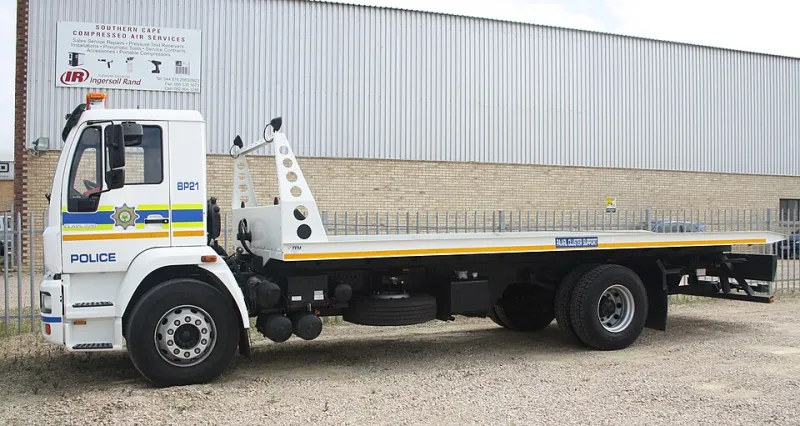
Photo: Bob Adams from Amanzimtoti, South Africa, CC BY-SA 2.0, via Wikimedia Commons
When the recovery truck pulls away, most of us breathe out. The drama is over. Except it isn't, quite. The part that follows — where your car is taken, who authorises what, and what the meter starts running on — is the bit nobody rehearses. This isn't meant to scare you. It's a plain-English look at the quiet aftermath, so the next phone call feels less like guesswork.
Recovery is a chain, not a single favour
A single breakdown can involve three different businesses: the call handler, the driver who turns up, and the yard or garage that ends up with the car. The person in the truck may be a subcontractor covering a shift. That's normal. What matters is that you get their details before they leave: company name, driver name, job number, and the exact destination. If you've stopped on Chorley New Road or in a lay-by out towards Rivington, it's easy to let them pack up and go while you're still finding your insurance documents. Ask first. Write it down.
You usually have a say in where it goes
If your recovery is coming through an insurer or a breakdown policy, they will often steer the car to an approved repairer or a holding compound. That's not automatically bad — it can speed up the claim. But you are allowed to ask for a garage you trust, especially if the car is under warranty or you've used a local place for years. Say it at the roadside, not the next morning. The driver can radio it in; the office can confirm whether it's within the covered radius. If you're paying privately, you're the customer. The destination is your call, as long as you're upfront about the cost.
The three usual destinations
An insurer-approved centre is the default for many claims. It's efficient, but storage can start charging from the moment the car arrives, and courtesy-car rules vary. A local independent garage is often the better emotional fit — you know the person on the desk — but check they can actually take the car today and whether they charge for sitting on it. A recovery compound is the holding pen: secure, impersonal, and usually the most expensive per day. Compounds often charge a daily rate plus an admin or release fee when you move the car. Ask for the tariff before the truck leaves, not after.
Storage charges: the clock starts early
A common surprise is that storage isn't a free grace period. Many yards charge from arrival, and the daily rate can be £20 to £40 plus VAT, sometimes more for larger vehicles or indoor space. If the insurer is paying, check the policy limit — some cover recovery and storage only up to a set amount. If you're paying privately, keep every receipt. And if the car is likely to be written off, storage can still accrue while the insurer negotiates. The fix is boring but effective: ring the insurer or yard the same day, confirm when storage started, and ask who authorises collection. A short, polite call can save a week of charges.
The paperwork and photos worth collecting
Before the driver leaves, ask for the recovery docket or job sheet. It should show the company, driver, registration, mileage, date and time, and destination. Photograph it. Then photograph the car: all four corners, the roof line, the wheels, the dashboard with the mileage, and any warning lights. If there's existing damage, get close-ups. These photos are your baseline if the car picks up a scuff in the yard. Count the keys, note how many you've handed over, and get a receipt for them. Take out anything you'll need — dashcam, parking permit, toll tag, shopping, medication. Ask the driver to note any personal items left in the car on the docket.
Insurer versus private: who is in charge?
With insurer-backed recovery, the insurer authorises the destination and usually the repair. You can still state a preference; just don't be surprised if the paperwork has to catch up. With private recovery, you are the decision-maker and the payer. Don't let a driver talk you into a compound 'just for now' without a price and a release procedure. And if the police have moved the car because it was causing an obstruction, that's a different set of statutory fees — ask the force's recovery desk for the schedule rather than guessing.
The quiet risk: nobody decides
The most expensive part of a recovery is often indecision. If you're shaken, or it's raining, or you're late for school pickup, it's tempting to deal with it tomorrow. Try not to. Set a reminder for the same evening: call the yard, confirm the car arrived, get the storage start date, and ask what happens next. If you can't do it, ask someone to do it for you. A phone note with the job number, destination, and a named contact is enough.
What to say while the truck is still there
Try a short script: 'Before you go, can I have the job number, your company name, and the address the car is going to? What's the daily storage rate, and who authorises release? I'd like it to go to [garage] if that's possible.' It sounds formal, but it's just housekeeping. The driver will have heard it before.
The bottom line
Recovery isn't the end of the story; it's a handover. The more you know at the roadside, the less the invoice surprises you later. And if you're unsure, ring the office while the truck is still in view. Five minutes now can save a fortnight of phone tag.